
What college coaches actually look for in your tape
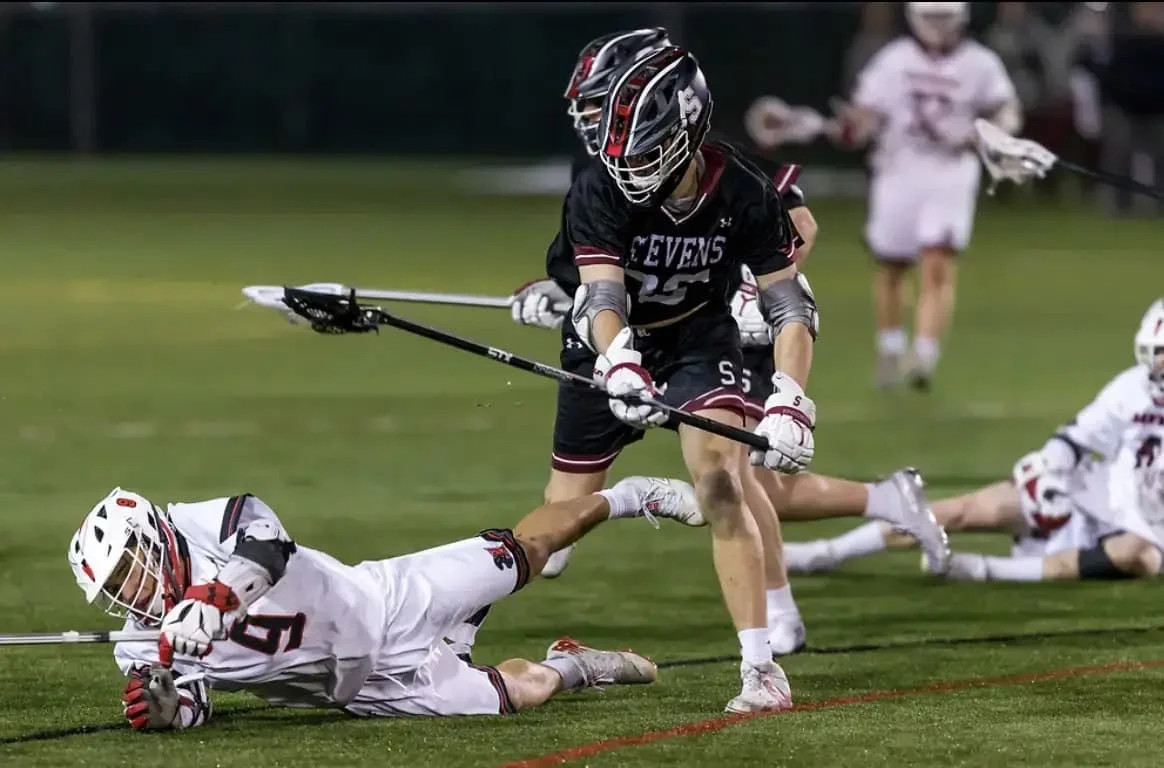
I have spent years on the other side of recruiting. I coached at Wagner College (Division 1) and helped run defense and recruiting at Babson and Montclair State. In that time I watched thousands of recruiting tapes.
Most of them were forgettable. A few got phone calls the next morning. The difference between those two stacks is smaller than you think, and it has very little to do with talent.
Here is what actually moves the needle.
The first 60 seconds matter more than the next 10 minutes
Coaches are watching tape at their desk between film sessions, in the airport, before practice. We are not sitting down for the full ten minute cut. If the first minute does not show me something useful, I am closing the tab.
What goes in the first minute:
- Your best clip. Not your second best. Your best.
- A second clip that shows you doing something different. If your best is a shot, show a dodge or a defensive play next.
- A third clip that shows your motor. A ground ball you fight for, a long sprint to the back side, anything that says "this kid plays hard."
That is your hook. After that, coaches will keep watching only because the first minute earned the time.
Show me something I can use
Highlight tapes too often look like a SportsCenter top ten:
- Every clip is a goal
- Every clip is from the same angle
- Every clip ends the second the ball goes in
Here is the thing. A college team has 40 to 50 players. The vast majority of them are not the leading scorer. Most are doing a specific job.
So when I am watching tape, I am asking "what is this kid going to do for my team?" not "is this kid the next Paul Rabil?"
Show me you can play a role:
- Middie? Show me you can ride. Play a wing. Run a long shift without your feet slowing down.
- Defender? Show me a slide, a recovery, a takeaway check, and a clear.
- Attackman? Show me a feed in tight, not just goals.
- Faceoff? Show me losses you recovered from and wing play, not just wins to your stick.
The kids who get recruited are usually not the ones with the flashiest highlights. They are the ones who showed me they could play a role.
Leave the clips long enough to see context
A clip that cuts the second the shot goes in tells me nothing. I want to see the play develop.
The right clip length:
- 5 seconds before the play (so I can see the setup)
- The play itself
- 3 seconds after (so I can see effort, body language, what you do next)
A clip that starts with you already in the act of shooting is a clip I cannot evaluate.
Effort jumps off the tape
This sounds soft until you have watched a few hundred tapes. You can tell within thirty seconds whether a kid plays hard or coasts.
What effort looks like on film:
- Sprinting back on defense after a turnover
- Fighting through a check on a ground ball instead of bailing out
- Running the back side of an unsettled break even when the ball is not coming to you
- Getting up off the turf fast
What kills your tape:
- Hands on hips after your teammate misses a shot off a beautiful feed from you.
- Walking back on defense
- Reacting to a bad ref call with your head down
- Yelling at a teammate after a turnover
I see that and I assume you are going to be a problem in our locker room.
Include the boring stuff in the email
Coaches need three things in the email with your tape:
- Your full name, position, graduation year, height, weight. Up top. Not buried in the third paragraph.
- Your high school coach's contact info, plus your club coach. I am going to call them before I call you.
- Your GPA and a current transcript. If you are at a D3, Ivy, or high academic D1 (Notre Dame, Duke, Hopkins, the Patriot League), this is more than half of whether you get in.
The kids whose emails are clean and complete jump to the top of the pile because we can process them in two minutes. The kids whose emails are missing half this stuff sit in the inbox for three weeks while we wait for the followup.
Camps and showcases are worth it
Coaches see thousands of recruits a year. We see most of them on tape. The ones we sign, we see in person.
If a coach is interested based on your film, the next step is almost always seeing you live:
- Camps at the school
- Recruiting tournaments
- Prospect days
That is where the actual offer happens. So once your tape is out and a coach is responding, get to that school's camp. There is no shortcut.
A simple checklist before you send
Before you hit send on your recruiting email, check:
- Best clip is in the first 60 seconds
- Tape shows at least three different things you do well
- Each clip has 5 seconds of setup and 3 seconds after the play
- No clip is over 15 seconds
- Total tape is under 5 minutes
- Your name, position, grad year, height, weight, and GPA are in the email body
- Both coaches' contact info is included
- You have actually watched the tape from start to finish yourself
Closing thought
College lacrosse recruiting feels like a black box from the outside. From the inside, it is mostly common sense.
The three things that get you recruited:
- Show me you can play the role I am recruiting for
- Show me you compete
- Send me a clean email
The kids who do those four things end up at a school where they can play and where they can also get a degree they care about. That is the actual goal.
The school name on the helmet matters less than people think. The fit matters more.
If you are starting to think about playing in college and want a former college coach to look at your tape and tell you the truth, send an inquiry and we will set up a conversation.

About the author
Dan Crotty is the founder of The Lax Teacher and a 3x All-American defenseman out of Stevens Institute of Technology. He has coached at Wagner College (Division 1), Babson, and Montclair State and now trains private and small group lacrosse athletes across Charlotte, Marvin, and Huntersville, NC.
Full coaching storyWant to train with Dan?
Book a Session