
Shooting drills that actually translate to the game
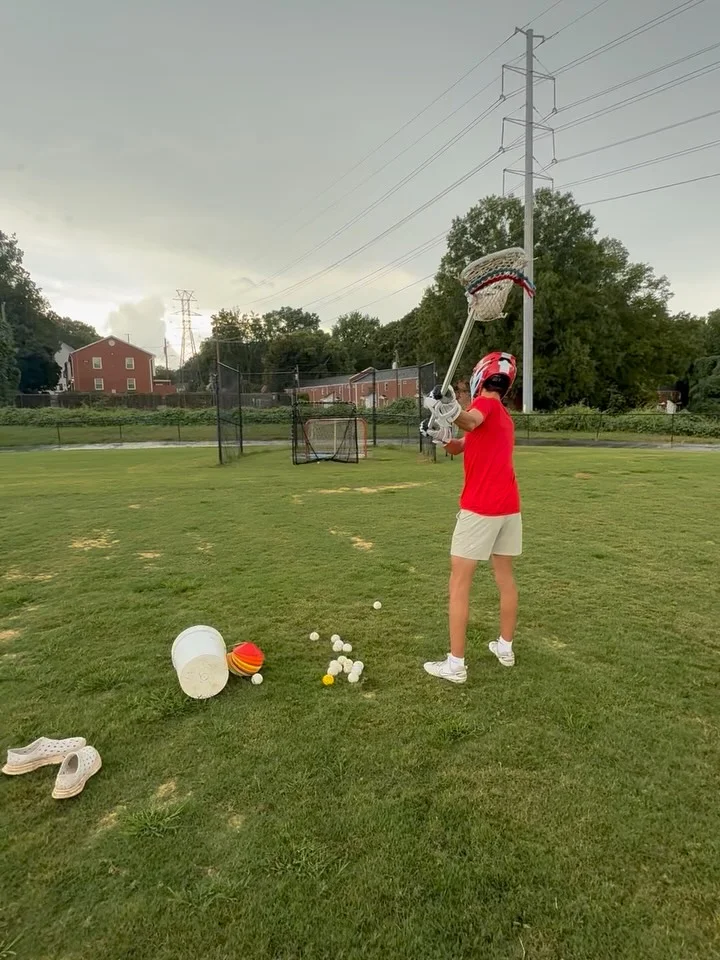
The fastest way to ruin a shooting practice is to set up six feet from the goal and hammer twelve shots into the back of the net. It feels great. It does almost nothing for you on Saturday.
Real shooting practice has to look like the game:
- Same speed
- Same angles
- Same kind of decisions you make with a defender on you
Here is how to set that up on your own field, with one bucket of balls and an hour.
Get your bucket together
Minimum twelve balls. More is better. If you do not have that many at home, "borrow" a few from behind your team's practice field (just do not get caught).
Why twelve at minimum:
- Enough reps in one set that you can settle into a rhythm
- No stopping to fetch every two minutes
- Stopping kills the conditioning piece, and shooting at game speed is supposed to feel like running
Start overhand if you are still learning
If you are an earlier stage player, your default release should be over the top.
- More accurate than three quarters or side arm
- Cleanest follow through
- Old school always prevails
Get a hundred over the top reps in before you ever start experimenting with low angle stuff. The shot will be better for it.
Down the alleys
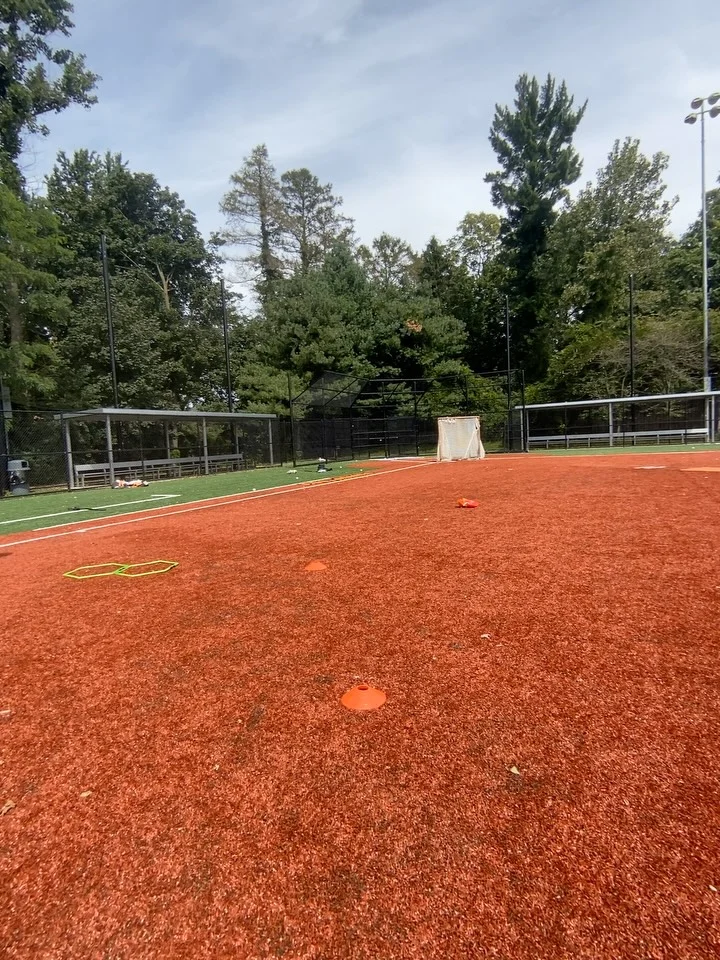
Set yourself up on the wing and run down the left alley. Plant. Shoot. Hustle back. Go again. Then switch and run down the right alley.
Both sides. Every session. Most kids only shoot from their dominant side. That is exactly why coaches force them to their off side in a game.
If your weak side alley shot is just as good as your strong side, you are now a much harder cover.
Time and room
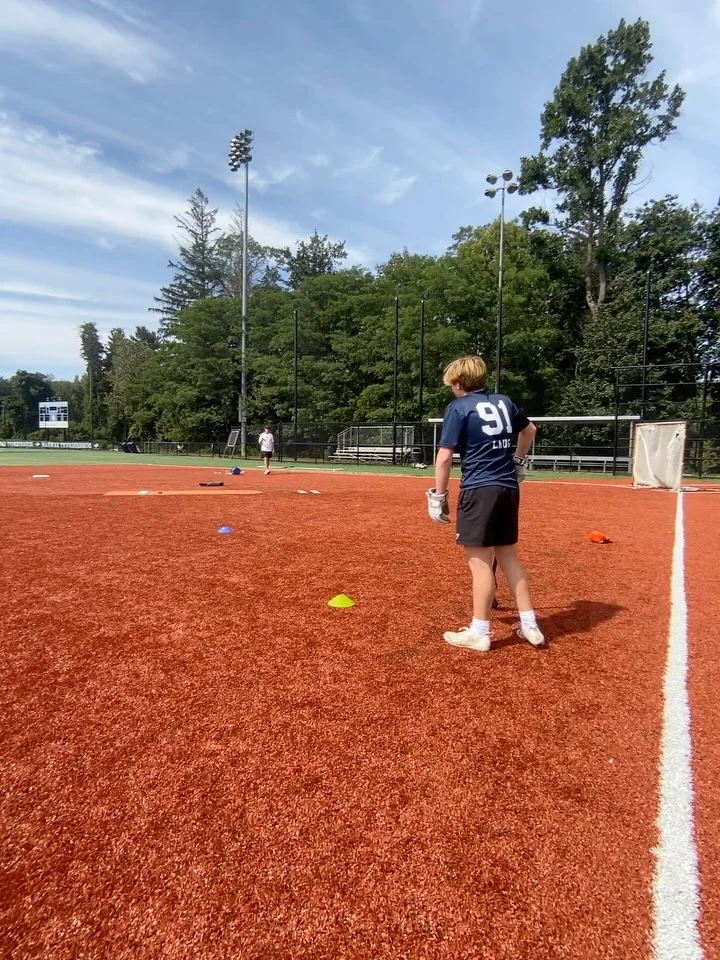
Time and room is when you have a step on your defender and have space to load up.
The footwork:
- Crow step (a long step into the shot) to transfer your weight
- Plant hard on the lead foot
- Punch with your hips, not just your arms
- Aim for corners, not the goalie's chest
A 90 mph shot at the goalie's chest is a save. A 75 mph shot at the bottom corner is a goal.
On the run, up the alley
This is the shot that comes off a dodge. Run up from X or a wing and shoot on the move:
- No plant
- No crow step
- Transfer your weight and release while your feet are still moving
It is harder than it sounds. Most players slow down at the last second, which gives the goalie the read. The drill works only if you keep your feet at game pace through the release.
Mimic the dodge
Once your basic alley shots are solid, layer in a dodge before the shot:
- Split dodge into a righty shot
- Roll dodge into a lefty shot
- Hitch and split into the alley
Use cones to mark:
- Where the dodge starts
- Where you expect the defender to slide from
- Where you finish
No shot in a real game starts from a standstill. So none of your practice reps should either.
You do not need a six on six. You just need enough structure that your body learns the shape of the play.
Use cones to build predictability
Pick three or four spots on the field you actually shoot from in a game:
- Top center
- Right wing
- Left alley
Drop a cone at each one. Run a circuit, shooting one ball from each spot, all the way through. Do that three or four times.
What you are training is the muscle memory of "this is the angle I have, this is the shot I take." Goalies position based on where you are on the field. If you have reps from those spots, your release is faster because you are not figuring out the angle in real time.
Bounce shots
For fundamental players, bounce shots are huge.
- A high shot is one read for a goalie: hands up, save.
- A bounce shot is two reads: hands down, ball changes height off the turf, recover.
That extra read is where bounce shots beat goalies.
The rule of thumb on a bounce shot:
- Aim one to two feet in front of the goalie's feet.
- Too short and the ball pops up right into their stick.
- Too deep and the bounce shot loses its trickery.
This is one of the most underused shots at the youth and high school level. Get good at it before you graduate eighth grade and you will score on goalies who think they are unbeatable.
A 60 minute session structure
If you have an hour and a bucket of balls, run this:
| Block | Time | Focus |
|---|---|---|
| Warmup | 10 min | Over the top from straight on, two sets of twelve |
| Alleys | 15 min | Both sides, both releases |
| Time and room | 15 min | Hard step in, corners only |
| Dodge into shot | 15 min | Split, roll, hitch into alley |
| Bounce shots | 5 min | Favorite scoring spot |
That is sixty productive minutes. Every shot mimics something you will actually do in a game.
Closing thought
Shooting is one of the easiest skills to practice wrong. Standing still, shooting at an empty cage, feels like you are working. The problem is that the situation you are training does not happen in a real game.
The fix:
- Move your feet
- Dodge before you shoot
- Use both alleys
- Mix in bounce shots
- Set a finish line and chase it every time you go out
The kid who does this for a summer becomes the kid who scores three or four times a game in the fall. Not because they are more talented, but because their reps look like the game.
If you want a coach to watch your release and clean up the small stuff that goalies eat alive, book a session and we will put time on the field together.

About the author
Dan Crotty is the founder of The Lax Teacher and a 3x All-American defenseman out of Stevens Institute of Technology. He has coached at Wagner College (Division 1), Babson, and Montclair State and now trains private and small group lacrosse athletes across Charlotte, Marvin, and Huntersville, NC.
Full coaching storyWant to train with Dan?
Book a Session